Tuesday, 12 January 2016

ABOUT THE AUTHOR:


Homer is best known as the author of the Iliad and the Odyssey. He was believed by the ancient Greeks to have been the first and greatest of the epic poets. Author of the first known literature of Europe, he is central to the Western canon.
When he lived, as well as whether he lived at all, is unknown. Herodotus estimates that Homer lived no more than 400 years before his own time, which would place him at around 850 BCE or later.Pseudo-Herodotus estimates that he was born 622 years before Xerxes I placed a pontoon bridge over the Hellespont in 480 BCE, which would place him at 1102 BCE, 168 years after the fall of Troy in 1270 BCE. These two end points are 252 years apart, representative of the differences in dates given by the other sources.
The importance of Homer to the ancient Greeks is described in Plato's Republic, which portrays him as the protos didaskalos, "first teacher", of the tragedians, the hegemon paideias, "leader of Greek culture", and the ten Hellada pepaideukon, "teacher of [all] Greece". Homer's works, which are about fifty percent speeches, provided models in persuasive speaking and writing that were emulated throughout the ancient and medieval Greek worlds. Fragments of Homer account for nearly half of all identifiable Greek literary papyrus finds in Egypt.

SUMMARY:

Nine years after the start of the Trojan War, the Greek (“Achaean”) army sacks Chryse, a town allied with Troy. During the battle, the Achaeans capture a pair of beautiful maidens, Chryseis and Briseis. Agamemnon, the leader of the Achaean forces, takes Chryseis as his prize, and Achilles, the Achaeans’ greatest warrior, claims Briseis. Chryseis’s father, Chryses, who serves as a priest of the god Apollo, offers an enormous ransom in return for his daughter, but Agamemnon refuses to give Chryseis back. Chryses then prays to Apollo, who sends a plague upon the Achaean camp.
After many Achaeans die, Agamemnon consults the prophet Calchas to determine the cause of the plague. When he learns that Chryseis is the cause, he reluctantly gives her up but then demands Briseis from Achilles as compensation. Furious at this insult, Achilles returns to his tent in the army camp and refuses to fight in the war any longer. He vengefully yearns to see the Achaeans destroyed and asks his mother, the sea-nymph Thetis, to enlist the services of Zeus, king of the gods, toward this end. The Trojan and Achaean sides have declared a cease-fire with each other, but now the Trojans breach the treaty and Zeus comes to their aid.
Click To Buy
With Zeus supporting the Trojans and Achilles refusing to fight, the Achaeans suffer great losses. Several days of fierce conflict ensue, including duels between Paris and Menelaus and between Hector and Ajax. The Achaeans make no progress; even the heroism of the great Achaean warrior Diomedes proves fruitless. The Trojans push the Achaeans back, forcing them to take refuge behind the ramparts that protect their ships. The Achaeans begin to nurture some hope for the future when a nighttime reconnaissance mission by Diomedes and Odysseus yields information about the Trojans’ plans, but the next day brings disaster. Several Achaean commanders become wounded, and the Trojans break through the Achaean ramparts. They advance all the way up to the boundary of the Achaean camp and set fire to one of the ships. Defeat seems imminent, because without the ships, the army will be stranded at Troy and almost certainly destroyed.
Concerned for his comrades but still too proud to help them himself, Achilles agrees to a plan proposed by Nestor that will allow his beloved friend Patroclus to take his place in battle, wearing his armor. Patroclus is a fine warrior, and his presence on the battlefield helps the Achaeans push the Trojans away from the ships and back to the city walls. But the counterattack soon falters. Apollo knocks Patroclus’s armor to the ground, and Hector slays him. Fighting then breaks out as both sides try to lay claim to the body and armor. Hector ends up with the armor, but the Achaeans, thanks to a courageous effort by Menelaus and others, manage to bring the body back to their camp. When Achilles discovers that Hector has killed Patroclus, he fills with such grief and rage that he agrees to reconcile with Agamemnon and rejoin the battle. Thetis goes to Mount Olympus and persuades the god Hephaestus to forge Achilles a new suit of armor, which she presents to him the next morning. Achilles then rides out to battle at the head of the Achaean army.
Meanwhile, Hector, not expecting Achilles to rejoin the battle, has ordered his men to camp outside the walls of Troy. But when the Trojan army glimpses Achilles, it flees in terror back behind the city walls. Achilles cuts down every Trojan he sees. Strengthened by his rage, he even fights the god of the river Xanthus, who is angered that Achilles has caused so many corpses to fall into his streams. Finally, Achilles confronts Hector outside the walls of Troy. Ashamed at the poor advice that he gave his comrades, Hector refuses to flee inside the city with them. Achilles chases him around the city’s periphery three times, but the goddess Athena finally tricks Hector into turning around and fighting Achilles. In a dramatic duel, Achilles kills Hector. He then lashes the body to the back of his chariot and drags it across the battlefield to the Achaean camp. Upon Achilles’ arrival, the triumphant Achaeans celebrate Patroclus’s funeral with a long series of athletic games in his honor. Each day for the next nine days, Achilles drags Hector’s body in circles around Patroclus’s funeral bier.
At last, the gods agree that Hector deserves a proper burial. Zeus sends the god Hermes to escort King Priam, Hector’s father and the ruler of Troy, into the Achaean camp. Priam tearfully pleads with Achilles to take pity on a father bereft of his son and return Hector’s body. He invokes the memory of Achilles’ own father, Peleus. Deeply moved, Achilles finally relents and returns Hector’s corpse to the Trojans. Both sides agree to a temporary truce, and Hector receives a hero’s funeral.

Continue reading

ABOUT THE AUTHOR:


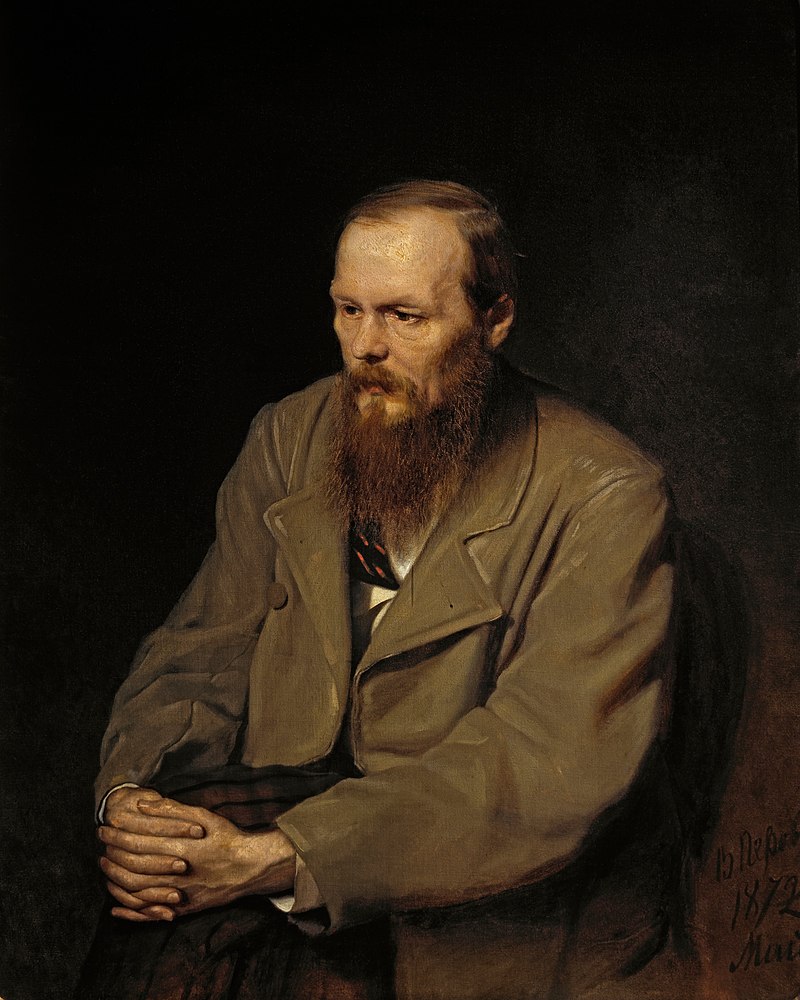
Fyodor Mikhailovich Dostoyevsky (11 November 1821 – 9 February 1881), sometimes transliterated Dostoevsky, was a Russian novelist, short story writer, essayist, journalist and philosopher. Dostoyevsky's literary works explore human psychology in the troubled political, social, and spiritual atmosphere of 19th-century Russia. Many of his works are marked by a preoccupation with Christianity, explored through the prism of the individual confronted with life's hardships and beauty.
He began writing in his 20s, and his first novel, Poor Folk, was published in 1846 when he was 25.
His major works include Crime and Punishment (1866), The Idiot (1869), Demons (1872) and The Brothers Karamazov (1880). His output consists of 11 novels, three novellas, 17 short novels and numerous other works. Many literary critics rate him as one of the greatest psychologists in world literature.His 1864 novella Notes from Underground is considered to be one of the first works of existentialist literature.
Born in Moscow in 1821, Dostoyevsky was introduced to literature at an early age through fairy tales and legends, and through books by Russian and foreign authors. His mother died in 1837, when he was 15, and around the same time he left school to enter the Nikolayev Military Engineering Institute. After graduating, he worked as an engineer and briefly enjoyed a lavish lifestyle, translating books to earn extra money. In the mid-1840s he wrote his first novel, Poor Folk, which gained him entry into St. Petersburg's literary circles.

SUMMARY:


Rodion Romanovich Raskolnikov, a former student, lives in a tiny garret on the top floor of a run-down apartment building in St. Petersburg. He is sickly, dressed in rags, short on money, and talks to himself, but he is also handsome, proud, and intelligent. He is contemplating committing an awful crime, but the nature of the crime is not yet clear. He goes to the apartment of an old pawnbroker, Alyona Ivanovna, to get money for a watch and to plan the crime. Afterward, he stops for a drink at a tavern, where he meets a man named Marmeladov, who, in a fit of drunkenness, has abandoned his job and proceeded on a five-day drinking binge, afraid to return home to his family. Marmeladov tells Raskolnikov about his sickly wife, Katerina Ivanovna, and his daughter, Sonya, who has been forced into prostitution to support the family. Raskolnikov walks with Marmeladov to Marmeladov’s apartment, where he meets Katerina and sees firsthand the squalid conditions in which they live.
The next day, Raskolnikov receives a letter from his mother, Pulcheria Alexandrovna, informing him that his sister, Dunya, is engaged to be married to a government official named Luzhin and that they are all moving to St. Petersburg. He goes to another tavern, where he overhears a student talking about how society would be better off if the old pawnbroker Alyona Ivanovna were dead. Later, in the streets, Raskolnikov hears that the pawnbroker will be alone in her apartment the next evening. He sleeps fitfully and wakes up the next day, finds an ax, and fashions a fake item to pawn to distract the pawnbroker. That night, he goes to her apartment and kills her. While he is rummaging through her bedroom, looking for money, her sister, Lizaveta, walks in, and Raskolnikov kills her as well. He barely escapes from the apartment without being seen, then returns to his apartment and collapses on the sofa.
Click To Buy
Waking up the next day, Raskolnikov frantically searches his clothing for traces of blood. He receives a summons from the police, but it seems to be unrelated to the murders. At the police station, he learns that his landlady is trying to collect money that he owes her. During a conversation about the murders, Raskolnikov faints, and the police begin to suspect him. Raskolnikov returns to his room, collects the goods that he stole from the pawnbroker, and buries them under a rock in an out-of-the-way courtyard. He visits his friend Razumikhin and refuses his offer of work. Returning to his apartment, Raskolnikov falls into a fitful, nightmare-ridden sleep. After four days of fever and delirium, he wakes up to find out that his housekeeper, Nastasya, and Razumikhin have been taking care of him. He learns that Zossimov, a doctor, and Zamyotov, a young police detective, have also been visiting him. They have all noticed that Raskolnikov becomes extremely uncomfortable whenever the murders of the pawnbroker and her sister are mentioned. Luzhin, Dunya’s fiancé, also makes a visit. After a confrontation with Luzhin, Raskolnikov goes to a café, where he almost confesses to Zamyotov that he is the murderer. Afterward, he impulsively goes to the apartment of the pawnbroker. On his way back home, he discovers that Marmeladov has been run over by a carriage. Raskolnikov helps to carry him back to his apartment, where Marmeladov dies. At the apartment, he meets Sonya and gives the family twenty rubles that he received from his mother. Returning with Razumikhin to his own apartment, Raskolnikov faints when he discovers that his sister and mother are there waiting for him.
Raskolnikov becomes annoyed with Pulcheria Alexandrovna and Dunya and orders them out of the room. He also commands Dunya to break her engagement with Luzhin. Razumikhin, meanwhile, falls in love with Dunya. The next morning, Razumikhin tries to explain Raskolnikov’s character to Dunya and Pulcheria Alexandrovna, and then the three return to Raskolnikov’s apartment. There, Zossimov greets them and tells them that Raskolnikov’s condition is much improved. Raskolnikov apologizes for his behavior the night before and confesses to giving all his money to the Marmeladovs. But he soon grows angry and irritable again and demands that Dunya not marry Luzhin. Dunya tells him that she is meeting with Luzhin that evening, and that although Luzhin has requested specifically that Raskolnikov not be there, she would like him to come nevertheless. Raskolnikov agrees. At that moment, Sonya enters the room, greatly embarrassed to be in the presence of Raskolnikov’s family. She invites Raskolnikov to her father’s funeral, and he accepts. On her way back to her apartment, Sonya is followed by a strange man, who we later learn is Svidrigailov—Dunya’s lecherous former employer who is obsessively attracted to her.
Under the pretense of trying to recover a watch he pawned, Raskolnikov visits the magistrate in charge of the murder investigation, Porfiry Petrovich, a relative of Razumikhin’s. Zamyotov is at the detective’s house when Raskolnikov arrives. Raskolnikov and Porfiry have a tense conversation about the murders. Raskolnikov starts to believe that Porfiry suspects him and is trying to lead him into a trap. Afterward, Raskolnikov and Razumikhin discuss the conversation, trying to figure out if Porfiry suspects him. When Raskolnikov returns to his apartment, he learns that a man had come there looking for him. When he catches up to the man in the street, the man calls him a murderer. That night Raskolnikov dreams about the pawnbroker’s murder. When he wakes up, there is a stranger in the room.
The stranger is Svidrigailov. He explains that he would like Dunya to break her engagement with Luzhin, whom he esteems unworthy of her. He offers to give Dunya the enormous sum of ten thousand rubles. He also tells Raskolnikov that his late wife, Marfa Petrovna, left Dunya three thousand rubles in her will. Raskolnikov rejects Svidrigailov’s offer of money and, after hearing him talk about seeing the ghost of Marfa, suspects that he is insane. After Svidrigailov leaves, Raskolnikov and Razumikhin walk to a restaurant to meet Dunya, Pulcheria Alexandrovna, and Luzhin. Razumikhin tells Raskolnikov that he is certain that the police suspect Raskolnikov. Luzhin is insulted to find that Raskolnikov, contrary to his wishes, is in attendance at the meal. They discuss Svidrigailov’s arrival in the city and the money that has been offered to Dunya. Luzhin and Raskolnikov get into an argument, during the course of which Luzhin offends everyone in the room, including his fiancée and prospective mother-in-law. Dunya breaks the engagement and forces him to leave. Everyone is overjoyed at his departure. Razumikhin starts to talk about plans to go into the publishing business as a family, but Raskolnikov ruins the mood by telling them that he does not want to see them anymore. When Raskolnikov leaves the room, Razumikhin chases him down the stairs. They stop, face-to-face, and Razumikhin realizes, without a word being spoken, that Raskolnikov is guilty of the murders. He rushes back to Dunya and Pulcheria Alexandrovna to reassure them that he will help them through whatever difficulties they encounter.
Raskolnikov goes to the apartment of Sonya Marmeladov. During their conversation, he learns that Sonya was a friend of one of his victims, Lizaveta. He forces Sonya to read to him the biblical story of Lazarus, who was resurrected by Jesus. Meanwhile, Svidrigailov eavesdrops from the apartment next door.
The following morning, Raskolnikov visits Porfiry Petrovich at the police department, supposedly in order to turn in a formal request for his pawned watch. As they converse, Raskolnikov starts to feel again that Porfiry is trying to lead him into a trap. Eventually, he breaks under the pressure and accuses Porfiry of playing psychological games with him. At the height of tension between them, Nikolai, a workman who is being held under suspicion for the murders, bursts into the room and confesses to the murders. On the way to Katerina Ivanovna’s memorial dinner for Marmeladov, Raskolnikov meets the mysterious man who called him a murderer and learns that the man actually knows very little about the case.
The scene shifts to the apartment of Luzhin and his roommate, Lebezyatnikov, where Luzhin is nursing his hatred for Raskolnikov, whom he blames for the breaking of his engagement to Dunya. Although Luzhin has been invited to Marmeladov’s memorial dinner, he refuses to go. He invites Sonya to his room and gives her a ten-ruble bill. Katerina’s memorial dinner goes poorly. The widow is extremely fussy and proud, but few guests have shown up, and, except for Raskolnikov, those that have are drunk and crude. Luzhin then enters the room and accuses Sonya of stealing a one-hundred-ruble bill. Sonya denies his claim, but the bill is discovered in one of her pockets. Just as everyone is about to label Sonya a thief, however, Lebezyatnikov enters and tells the room that he saw Luzhin slip the bill into Sonya’s pocket as she was leaving his room. Raskolnikov explains that Luzhin was probably trying to embarrass him by discrediting Sonya. Luzhin leaves, and a fight breaks out between Katerina and her landlady.
After the dinner, Raskolnikov goes to Sonya’s room and confesses the murders to her. They have a long conversation about his confused motives. Sonya tries to convince him to confess to the authorities. Lebezyatnikov then enters and informs them that Katerina Ivanovna seems to have gone mad—she is parading the children in the streets, begging for money. Sonya rushes out to find them while Raskolnikov goes back to his room and talks to Dunya. He soon returns to the street and sees Katerina dancing and singing wildly. She collapses after a confrontation with a policeman and, soon after being brought back to her room, dies. Svidrigailov appears and offers to pay for the funeral and the care of the children. He reveals to Raskolnikov that he knows Raskolnikov is the murderer.
Raskolnikov wanders around in a haze after his confession to Sonya and the death of Katerina. Razumikhin confronts him in his room, asking him whether he has gone mad and telling him of the pain that he has caused his mother and sister. After their conversation, Porfiry Petrovich appears and apologizes for his treatment of Raskolnikov in the police station. Nonetheless, he does not believe Nikolai’s confession. He accuses Raskolnikov of the murders but admits that he does not have enough evidence to arrest him. Finally, he urges him to confess, telling him that he will receive a lighter sentence if he does so. Raskolnikov goes looking for Svidrigailov, eventually finding him in a café. Svidrigailov tells him that though he is still attracted to Dunya, he has gotten engaged to a sixteen-year-old girl. Svidrigailov parts from Raskolnikov and manages to bring Dunya to his room, where he threatens to rape her after she refuses to marry him. She fires several shots at him with a revolver and misses, but when he sees how strongly she dislikes him, he allows her to leave. He takes her revolver and wanders aimlessly around St. Petersburg. He gives three thousand rubles to Dunya, fifteen thousand rubles to the family of his fiancée, and then books a room in a hotel. He sleeps fitfully and dreams of a flood and a seductive five-year-old girl. In the morning, he kills himself.
Raskolnikov, who is visiting his mother, tells her that he will always love her and then returns to his room, where he tells Dunya that he is planning to confess. After she leaves, he goes to visit Sonya, who gives him a cross to wear. On the way to the police station, he stops in a marketplace and kisses the ground. He almost pulls back from confessing when he reaches the police station and learns of Svidrigailov’s suicide. The sight of Sonya, however, convinces him to go through with it, and he confesses to one of the police officials, Ilya Petrovich.
A year and a half later, Raskolnikov is in prison in Siberia, where he has been for nine months. Sonya has moved to the town outside the prison, and she visits Raskolnikov regularly and tries to ease his burden. Because of his confession, his mental confusion surrounding the murders, and testimony about his past good deeds, he has received, instead of a death sentence, a reduced sentence of eight years of hard labor in Siberia. After Raskolnikov’s arrest, his mother became delirious and died. Razumikhin and Dunya were married. For a short while, Raskolnikov remains as proud and alienated from humanity as he was before his confession, but he eventually realizes that he truly loves Sonya and expresses remorse for his crime.

Continue reading

ABOUT THE AUTHOR:


Ivan Sergeyevich Turgenev (November 9, 1818 – September 3, 1883) was a Russian novelist, short story writer, and playwright. His first major publication, a short story collection entitled A Sportsman's Sketches (1852), was a milestone of Russian Realism, and his novel Fathers and Sons (1862) is regarded as one of the major works of 19th-century fiction.
Ivan Sergeyevich Turgenev was born into a family of Russian land-owners in Oryol, Russia, on November 9, 1818. His father, Sergei Nikolaevich Turgenev, a colonel in the Russian cavalry, was a chronic philanderer[citation needed]. Ivan's mother, Varvara Petrovna Lutovinova, was a wealthy heiress, who had an unhappy childhood and suffered in her marriage. Ivan's father died when Ivan was sixteen, leaving him and his brother Nicolas to be brought up by their abusive mother. Ivan's childhood was a lonely one, in constant fear of his mother who beat him often. After the standard schooling for a son of a gentleman, Turgenev studied for one year at the University of Moscow and then moved to the University of Saint Petersburg from 1834 to 1837, focusing on Classics, Russian literature, and philology. From 1838 until 1841 he studied philosophy, particularly Hegel, and history at the University of Berlin. He returned to Saint Petersburg to complete his master's examination.

SUMMARY:


Arkady Nikolaevich returns to his father's farm at Maryino on the 20th of May 1859. His father, Nikolai, is ecstatic to see him, and happily takes in Bazarov, Arkady's new friend from school in Petersburg.
Nikolai is a widower who has recently freed his serfs (members of the Russian peasant class, bound to a landowning lord), and he has been selling off his land to make ends meet. He has a relationship with a young girl named Fenichka who used to be a servant, and the two of them now have a son named Mitya. He lives with his brother, Pavel, who used to be a great general.
One morning when Bazarov goes out to collect frogs (he enjoys doing experiments on them), Pavel and Nikolai ask Arkady about his new friend. Arkady proudly tells them that Bazarov is a nihilist, a man willing to question every principle no matter how much it is revered. The two old men are a bit taken aback, and, when Bazarov returns, he and Pavel have an argument. Pavel is much prouder than his brother Nikolai, and he has no patience for the rude young man.
Arkady, though still loyal to his friend, notices how rude Bazarov is. He tried to get him to sympathize with Pavel by telling him Pavel's story. Pavel was a well-respected society man and a captain in the army, but then he lost his head over an enigmatic woman named Princess R. She never accepted his advances, and eventually died in a state of insanity. Bazarov persists in his arrogance, and thinks that Pavel has made a mess of his own life and now preaches to the young.
ClIck To Buy
A few weeks later, an even larger fight erupts between Pavel and Bazarov. Pavel argues that one cannot live without principles, and that the Russians are a traditional people, a people of faith. Bazarov, for his part, argues that the young can do nothing more useful than renounce everything. Both men lose their tempers, and separate in order to cool off. After observing the argument, Nikolai remembers a time he told his mother that she couldn't understand him because she was of a different generation. He wonders if the same thing has now happened between himself and his son Arkady.
Bazarov and Arkady go to a nearby town to visit a successful relative of Arkady's, Matvei Ilyich Kolyazin. Kolyazin takes Arkady under his wing and invites the two young men to a ball. The same day, Bazarov runs into an old companion named Victor Sitnikov, who insists that they come and have drinks with a clever older woman he has met, Madame Kukshin. Madame Kukshin tries hard to draw Bazarov out, but he is unimpressed and reveals that he has little interest in women's rights – a subject about which she is very passionate.
At the ball, Arkady and Bazarov meet Anna Sergeyevna Odintsov, an acquaintance of Madame Kukshin's. Arkady is instantly smitten with her, and manages to chat with her for most of the night. It is clear, however, that she is more curious about Bazarov. She invites the two of them to her hotel, and then to her place in the country at Nikolskoye.
Anna Sergeyevna grew up very independent. Her father lost his fortune gambling and died young. She and her sister Katya would have had a simple life if she hadn't met Monsieur Odintsov. Anna and Odintsov were married, and, when he died, he left them a fortune.
Over the course of the visit, she and Bazarov become very close. Arkady feels like he is elbowed out, and he is left to spend most of his time with Anna's younger sister, Katya. Though Bazarov can hardly admit it to himself, he is falling in love with Anna Sergeyevna. For her part, she reveals to him that she feels incomplete, that she worries that happiness will elude her. Bazarov is frustrated with her and thinks she is being coy, but he can't help himself. He makes a declaration of love to her, and she rejects him.
The situation at Nikolskoye becomes very tense until Sitnikov arrives, uninvited. Shortly after, Bazarov decides that he will go to visit his parents, who have been dying to see him. Arkady announces that he will also leave, but opts to go to Bazarov's home over riding back to Maryino with Sitnikov. In the carriage, Bazarov tells Arkady that they both acted like fools; that they were too taken in by the women at Nikolskoye. He tells himself that he is over Anna Sergeyevna, and looks forward to seeing his father.
Bazarov's parents, Vassily Ivanych and Arina Vlassyevna, are thrilled to see him. It has been three years, and they clear out a room for him and Arkady and do their best not to fuss over them. Arkady has a talk with Vassily Ivanych about Bazarov, and they both agree that one day he will be a great man. Bazarov, however, seems irritated by his parents. He is in a dark and melancholy mood, and when Arkady comments on his cynicism, the two of them begin to bicker. After just three days, Bazarov decides to leave, though he promises his parents he will return soon. They are crushed, and cling to one another in their grief.
On the way home, Arkady talks Bazarov into making a detour to the Odintsovs'. It is a brief and awkward visit, but Anna Sergeyevna encourages them to stop back at another time. When they return to Maryino, Arkady realizes that he can't stop thinking of the Odintsovs. His father shows him some letters that Anna Sergeyevna's mother sent to Arkady's mother, and Arkady decides to use it as a pretext to return. When he does, Anna Sergeyevna is very happy to see him, but he realizes that it is Katya he can't stop thinking about.
Bazarov is left alone at Maryino, and retires into solitude, working all day. Pavel tolerates him, and Nikolai enjoys popping in to help with experiments. Bazarov begins to become close with Fenichka. One day, the two of them are joking around and he makes a move and kisses her. A moment later, Pavel emerges from behind a nearby bush. Fenichka is embarrassed and angry with Bazarov.
Pavel does not tell his brother what happened. The next day, however, he proposes a duel to Bazarov. Bazarov takes it all as tongue-in-cheek, but agrees. They meet in the morning using the servant Piotr as witness. Pavel fires first and misses, and Bazarov shoots and hits Pavel in the thigh. As soon as Pavel is hit, Bazarov goes and attends to him. Piotr rushes back to get Nikolai. Bazarov and Pavel lie to him and say they fell out over English politics. Bazarov leaves as quickly as he can, and, as Pavel heals, he tells Nikolai that he wants him to do right by Fenichka and marry her. Nikolai is thrilled since the only reason he hadn't already done so was because he was afraid that Pavel would disapprove.
Meanwhile, Arkady is spending a great deal of time with Katya at Nikolskoye. They discuss Bazarov and Anna Sergeyevna, and Katya thinks that Arkady is coming out from under the shadow of Bazarov's influence. Bazarov comes to Nikolskoye to tell Arkady what happened with Pavel. Arkady is shocked, but Bazarov assures him that Pavel is fine. At Arkady's insistence, Bazarov goes to see Anna Sergeyevna.
The two of them are uncomfortable together, though they fall into a companionable relationship. Bazarov reveals to Anna Sergeyevna that Arkady was in love with her when they first met, and she begins to think differently of Arkady. The next day, however, Arkady asks Katya to meet him out on the portico. He tries to propose, but trips over his words. They are interrupted when they overhear a conversation between Bazarov and Anna Sergeyevna, who are walking nearby.
It comes out that Anna Sergeyevna is considering a relationship with Arkady, but as soon as she and Bazarov walk on, Arkady proposes to Katya. She accepts and he is thrilled. Bazarov decides that he must leave and return home. He tells Arkady that this is their last goodbye, and that Arkady lacks the spirit that he himself has. He thinks that gentry will only go so far, they will not fight. Arkady is disappointed that Bazarov doesn't have anything nicer to say to him at their parting, but, when he begins speaking with Katya after Bazarov departs, Arkady quickly forgets him.
Bazarov returns home, and begins helping his father, a doctor, treat the local peasants. Vassily Ivanych is happy and very proud, but he worries that Bazarov is sad and gloomy. One day, Bazarov is in town, and decides to help the local doctors open up a man who recently died of typhus. In the process, he accidentally cuts himself. He is very calm about it, but as the days pass, it becomes clear that he has contracted the disease. He is feverish and bed-ridden.
One of Bazarov's last wishes is for his father to send a message Anna Sergeyevna and tell her that he is dying. His father does so, and Anna Sergeyevna immediately comes to see them with a German doctor in tow. Bazarov is partly delirious. He thinks ironically of all the time he spent considering himself a giant, and now his only problem is how to die decently. At his request, Anna Sergeyevna gives him a kiss on the forehead before she leaves. He dies the same evening.
The book closes with the weddings of Nikolai and Fenichka and Arkady and Katya. Pavel leaves them and goes to Dresden to live out the remainder of his life. The narrator surveys the lives of all the characters before ending by speaking of Bazarov's grave. Bazarov's parents often go there to pray and weep, and the narrator thinks that no matter how stubborn their son was in his nihilism, it is not possible that they weep in vain.

Continue reading

Sunday, 10 January 2016

ABOUT THE AUTHOR:


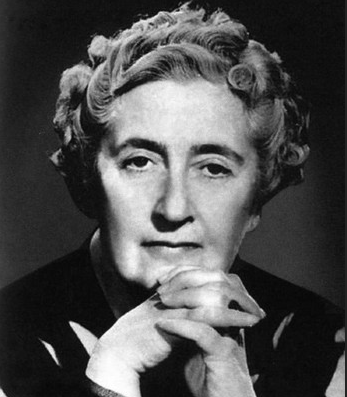
Dame Agatha Mary Clarissa Christie, Lady Mallowan, DBE (15 September 1890 – 12 January 1976) was an English crime novelist, short story writer and playwright. She also wrote six romances under the name Mary Westmacott, but she is best known for the 66 detective novels and 14 short story collections that she wrote under her own name, most of which revolve around the investigative work of such characters as Hercule Poirot, Jane Marple, Parker Pyne, Harley Quin/Mr Satterthwaite and Tommy and Tuppence Beresford. She wrote the world's longest-running play, a murder mystery, The Mousetrap. In 1971 she was made a Dame for her contribution to literature.
Christie was born into a wealthy upper-middle-class family in Torquay, Devon. She served in a hospital during the First World War before marrying and starting a family in London. She was initially unsuccessful at getting her work published, but in 1920 The Bodley Head press published her novel The Mysterious Affair at Styles, featuring the character of Hercule Poirot. This launched her literary career.
The Guinness Book of World Records lists Christie as the best-selling novelist of all time. Her novels have sold roughly 2 billion copies, and her estate claims that her works come third in the rankings of the world's most-widely published books, behind only Shakespeare's works and the Bible. According to Index Translationum, she remains the most-translated individual author – having been translated into at least 103 languages. And Then There Were None is Christie's best-selling novel, with 100 million sales to date, making it the world's best-selling mystery ever, and one of the best-selling books of all time.

SUMMARY:


The novel is narrated by Dr. James Sheppard, a physician in the town of King’s Abbott. The story begins with the death of Mrs. Ferrars, who overdosed on Veronal, a sleeping medication. Much of the town (including Dr. Sheppard’s gossip-loving sister, Caroline) believes Mrs. Ferrars poisoned her husband a year before. Caroline now speculates that Mrs. Ferrars has committed suicide with Veronal over the guilt.
Meanwhile, Roger Ackroyd, the town’s wealthiest citizen who was expected to marry Mrs. Ferrars, invites Dr. Sheppard to dinner, claiming he has something important to tell him. Also present at dinner are Mrs. Cecil Ackroyd, Roger’s sister-in-law, Flora Ackroyd, his niece (who recently got engaged to Ackroyd’s stepson Ralph Paton), Geoffrey Raymond, Ackroyd’s young secretary, and Major Blunt, Ackroyd’s friend. Distraught throughout the meal, Ackroyd finally has a private discussion with Dr. Sheppard after dinner. In his study, he reveals to Dr. Sheppard that not only did Mrs. Ferrars actually kill her husband, she was being blackmailed for it. She revealed all of this to Ackroyd before taking her life because of the emotional and financial strain she was under.
Although she didn’t tell him who the blackmailer was, he had a feeling she left a message for him before her death. At that moment, Ackroyd’s secretary Parker arrives with the evening mail, which contains a letter from the late Mrs. Ferrars. Ackroyd begins to read it out loud. In it, Mrs. Ferrars announces she will name her blackmailer and asks Ackroyd to seek revenge on her blackmailer. Ackroyd refuses to read the name of the blackmailer with Sheppard present.
Dr. Sheppard leaves Fernly Park (Ackroyd’s home), but on his walk back bumps into a stranger who asks for directions to the estate. At home, Dr. Sheppard and Caroline are about to go to bed when the phone rings. He explains to Caroline that Parker has called from Fernly Park to tell him that Ackroyd has been murdered. Dr. Sheppard rushes over, but when he gets there Parker denies making the phone call. Nonetheless, they break into Ackroyd’s locked study and find him murdered in his chair.
Click To Buy
The next day, Dr. Sheppard is approached by Flora Ackroyd to help recruit Dr. Sheppard’s new neighbor, the retired Belgian detective Hercule Poirot, to help investigate the murder. Flora is worried that the police are going to blame Ralph Paton for killing her uncle, especially since Ralph, who had been spotted approaching Fernly Park that night, is now nowhere to be found. The police have found footprints matching a pair of shoes that Ralph owned outside the window to Ackroyd’s study, and at 9:30 pm (after Dr. Sheppard had left, but before the body was found at 10:30), Major Blunt and Geoffrey Raymond both overheard Ackroyd speaking to someone in his office.
Because Flora claims to have wished her uncle goodnight at 9:45 pm and Dr. Sheppard is convinced that Ackroyd had been dead at least a half hour when he found the body at 10:30, the police are convinced that the murder was committed between 9:45 and 10:00 pm. Although all members of Ackroyd’s household stood to gain financially from his death, Ralph especially inherited the bulk of his uncle’s fortune. After they have determined that Ralph recently was in a great deal of debt, they suspect him all the more.
Although the police are convinced it is Ralph, Poirot’s thorough investigation leaves him unconvinced. He is fixated on the phone call to Dr. Sheppard (which the police trace, and determine came from the King’s Abbot train station, not Fernly Park), and the position of a grandfather chair in Ackroyd’s office, which had been moved into the center of the room when Dr. Sheppard and Parker found the body. In the course of his investigation, Poirot discovers a goose quill and a piece of cambric in the summerhouse on the Fernly Park grounds, as well as a wedding ring inscribed “From R” in a goldfish pond on the grounds.
Poirot gathers Mrs. Cecil Ackroyd, Flora Ackroyd, Geoffrey Raymond, Major Blunt, and Dr. Sheppard together and accuses all of them of hiding something from him which is relevant to the case. In the meantime, Poirot notes that the parlormaid, Ursula Bourne, is the only person in the household who doesn’t have a clear alibi for the theoretical time of the murder and so identifies her as another suspect. Mrs. Cecil Ackroyd and Geoffrey Raymond quickly come forward to Dr. Sheppard and Poirot to admit their secrets – both separately acknowledge that they were in debt, and Ackroyd’s death resolves most of their money issues.
Poirot also determines that Parker, who he suspected as Mrs. Ferrars’ blackmailer, is guilty of nothing more than snooping on Roger Ackroyd the night of the murder when he heard the word “blackmail.” Parker successfully blackmailed his previous employer, and was hoping to blackmail Ackroyd, as well. The police, meanwhile, have tracked down the stranger who approached Fernly Park the night of the murder. They arrest a man named Charles Kent, who Dr. Sheppard confirms was the stranger.
Meanwhile, Poirot determines that Flora lied about wishing her uncle goodnight at 9:45 on the night of the murder – instead, she had snuck up to his bedroom to steal money to settle some debts of her own, and had to pretend she was merely wishing Ackroyd goodnight to avoid suspicion. In the course of her confession, Major Blunt’s secret love for Flora is revealed when he tries to take the blame for her crime. Poirot convinces Major Blunt to be honest with Flora about his love for her – he assures him that Flora and Ralph Paton are not really in love, but merely engaged for convenience’s sake.
Poirot asks for a meeting with Miss Russell, Ackroyd’s housekeeper. He gets her to admit that Charles Kent is the son she bore out of wedlock many years before, and that he owns the goose quill that they found in the summerhouse. Miss Russell met him there before dinner on the night of the murder after he contacted her; she insists he cannot be the murderer.
Soon, Flora and Major Blunt are engaged, and Poirot traces the owner of the gold ring to Ursula Bourne. After placing a fake notice in the newspaper that the police captured Ralph Paton, Bourne seeks out Poirot and confesses to having married Ralph in secret months before. They met around 9:30 in the summerhouse and fought about his announced engagement to Flora Ackroyd (Ralph agreed to the engagement hoping it would mean his uncle would discharge his debts.)
Poirot summons all the suspects to his home once again and reveals all these discoveries. He further reveals that he has determined Ackroyd purchased a dictaphone the week before and that is what Raymond and Blunt heard when they assumed Ackroyd was talking to someone at 9:30. He then reveals Ralph Paton, who Dr. Sheppard had been hiding by pretending he was a patient in a local asylum. Once Poirot determined what Sheppard had done, he got Ralph out. Ralph admits that he fought with Ursula in the summerhouse, then walked around, frustrated. He does not have an alibi for the time of the murder. Poirot announces that it’s simple: for Ralph to be exonerated, the real murderer must come forward. He claims to know the identity of the real murderer, and explains he will bring the truth to the police the next morning.
He discharges the group, but asks Dr. Sheppard to stay behind. In a stunning plot twist, Poirot reveals that it is Dr. Sheppard who is the murderer. Sheppard stabbed Ackroyd before leaving him that night, programmed the Dictaphone to go off at 9:30 and provide him with an alibi, then snuck around the side of the house, crawled into Ackroyd’s study, locked it from the inside, and planted the footprints with Ralph’s shoes in the mud. He hid Ralph so that the police would find him more suspicious. He murdered Ackroyd because it was he, Dr. Sheppard, who was Mrs. Ferrars’ blackmailer, and he knew if Ackroyd found out he would be ruined.
Faced with the knowledge that Poirot will go to the police in the morning, and hoping that Poirot can keep the truth from his sister Caroline, Dr. Sheppard goes home and prepares to kill himself with an overdose of Veronal.

Continue reading

ABOUT THE AUTHOR:


John Webster (c. 1580 – c. 1634) was an English Jacobean dramatist best known for his tragedies The White Devil and The Duchess of Malfi, which are often regarded as masterpieces of the early 17th-century English stage.His life and career overlapped William Shakespeare's.
Webster's life is obscure, and his date-of-birth and death date are not known. His father, a carriage maker also named John Webster, married a blacksmith's daughter named Elizabeth Coates on 4 November 1577, and it is likely that Webster was born not long after in or near London. The family lived in St. Sepulchre's parish. Father John, and Uncle, Edward Webster, were Freemen of the Merchant Taylors' Company and Webster attended Merchant Taylors' School in Suffolk Lane, London.On 1 August 1598, "John Webster, lately of the New Inn" was admitted to the Middle Temple, one of the Inns of Court; in view of the legal interests evident in his dramatic work, this is possibly the playwright. Webster married the 17-year-old Sara Peniall on 18 March 1606 at St Mary's Church, Islington. A special licence had to be obtained to permit a wedding in Lent, which was necessary as at the date of their marriage, Sara was seven months pregnant. Their first child, John, was baptised at the parish of St Dunstan-in-the-West on 8 March 1605 or 1606. Bequests in the will of a neighbour who died in 1617, indicate that other children were born to him.
Most of what is otherwise known of him relates to his theatrical activities. Webster was still writing plays as late as the mid-1620s, but Thomas Heywood's Hierarchie of the Blessed Angels (licensed 7 November 1634) speaks of him in the past tense, implying he was then dead.

SUMMARY:


The Duchess of Malfi takes place in Italy, mostly at the Duchess’s palace in Malfi, in the sixteenth century. The Duchess is a young widow whose two brothers, Ferdinand and the Cardinal, are visiting her from Rome at the play’s start. Antonio, the manager of her household, has just returned from France. Before leaving the Duchess, Ferdinand engages Bosola, previously used by the Cardinal as a hit man, to ostensibly manage the Duchess’s horses, but in reality to spy on her for the brothers so they can be sure she remains chaste and does not remarry. Bosola is reluctant, but eventually agrees.
Before they return to Rome, Ferdinand and the Cardinal lecture the Duchess about the impropriety of remarriage. She insists that she has no plans for remarriage, and shows some irritation at their attempts to control her. However, as soon as they leave, she sets in motion a plan to propose to Antonio with the help of her maid, Cariola. Antonio and the Duchess marry, and the Duchess reassures Antonio that they will find a way to appease her brothers.
Act Two is set about nine months later. The Duchess is pregnant and Bosola, suspecting her condition, hatches a plan to prove it to himself by giving her apricots, thought to induce labor. She accepts them, and immediately becomes ill, rushing off to her bedroom. Antonio and Delio discuss how to keep her labor secret.
Bosola now assumes his belief is correct, but finds further definitive proof through a horoscope Antonio wrote for the infant. With the information confirmed, Bosola he writes a letter to the Duchess’s brothers to tell them the news. The brothers are both incensed, but the Cardinal maintains a cool calm, whereas Ferdinand grows erratically angry. Neither of them realizes that she is married, and hence assume the baby is a bastard. Ferdinand says he won’t take any action until he knows who the baby’s father is.
Click To Buy
Act Three begins about two years later, with Delio’s return to the Duchess’s palace. Antonio and the Duchess have had two more children in the meantime. Ferdinand has recently arrived, and both Antonio and Delio suspect that he knows about the Duchess’s children. Ferdinand surprises the Duchess in her bedroom, and when she tells him that she is married, he tells her she should never reveal to him the name of her lover lest terrible violence then be unleashed on all of them. He further banishes her forever from his sight.
The Duchess, who wishes to protect Antonio by removing him from Malfi, falsely claims he has stolen from her and hence has him banished to Ancona. Once he has left, Bosola defends his virtue to the Duchess so emphatically that she admits the secret of their marriage. Bosola pretends to support her, and she sends him after Antonio with money and news that she will soon follow him. In Ancona a few days later, the Cardinal catches up to them and banishes the Duchess and her family from there.
On their way out of town, Bosola brings her an ostensibly forgiving but actually threatening letter from Ferdinand, and so the Duchess, fearing an ambush, tells Antonio to separate from her with their oldest son. Immediately after they part, Bosola and a group of soldiers take the Duchess and her two remaining children captive and bring them back to her palace.
In Act Four, Bosola tells Ferdinand that the Duchess is bearing her imprisonment nobly, which angers him. In an effort to make her insane with despair, he presents her with wax corpses of her family to convince her they have died. Though Bosola pleas with Ferdinand to cease his torture, he won’t listen, and instead sends a group of madmen to torment her. Bosola returns, disguised as a tomb-maker, and prepares the Duchess for her impending death. Executioners follow with a cord to strangle her, but the Duchess remains steadfastly calm and courageous, at peace with the idea of rejoining her family, who she still believes are dead. They strangle her.
Bosola next orders her children and Cariola killed. Cariola pleads for her life, to no avail. When Ferdinand confronts the Duchess’s body, he is suddenly overtaken with remorse and angry at Bosola for following his orders. He not only betrays Bosola by refusing the latter a promised reward, but also shows signs of insanity before he exits. The Duchess shows a final sign of life, and before she truly dies, Bosola tells her that Antonio is still alive. Bosola shows genuine sadness when she dies.
In Act Five, Antonio, ignorant of his wife and children’s deaths, plans to beg the Cardinal that night for a reconciliation. Ferdinand has now completely lost his mind and is afflicted with lycanthropia, or the belief that he is a wolf.
Bosola arrives and the Cardinal pretends that he has no idea about the Duchess's death. He offers Bosola a great reward for the murder of Antonio, an offer Bosola accepts even though he is plotting revenge. Julia, the Cardinal’s mistress, approaches Bosola, declaring her love for him, and Bosola uses her to get the Cardinal to admit his involvement in the Duchess's murder.
After the Cardinal kills Julia, Bosola reveals he has overheard the secret and demands his reward killing the Duchess. The Cardinal, once again, promises it will come after he has killed Antonio and helped him get rid of Julia’s body. Bosola pretends to agree, but tells the audience that he will find Antonio to either protect him or help him get his vengeance against the Cardinal and Ferdinand.
The Cardinal tells his courtiers to stay away no matter what they hear from him or Ferdinand, ostensibly because Ferdinand’s madness gets worse when people are around, but actually because he wants privacy with which to dispose of Julia’s body. Bosola, waiting outside the Cardinal’s room, accidentally kills Antonio, who has come to see the Cardinal. Distraught, he goes into the Cardinal’s room and attacks him.
Because of the Cardinal’s warning, his courtiers at first ignore his cries for help. Ferdinand joins the fray and stabs both the Cardinal and Bosola. Bosola kills Ferdinand. The courtiers finally enter in time to see the Cardinal and Bosola die, but not before the latter has confessed the particulars of the situation. Delio enters with Antonio and the Duchess’s oldest son, who is the sole survivor of the family. Delio and the courtiers promise to raise the boy as a legacy to his parents, which gives the play a final glimmer of hope.

Continue reading

ABOUT THE AUTHOR:


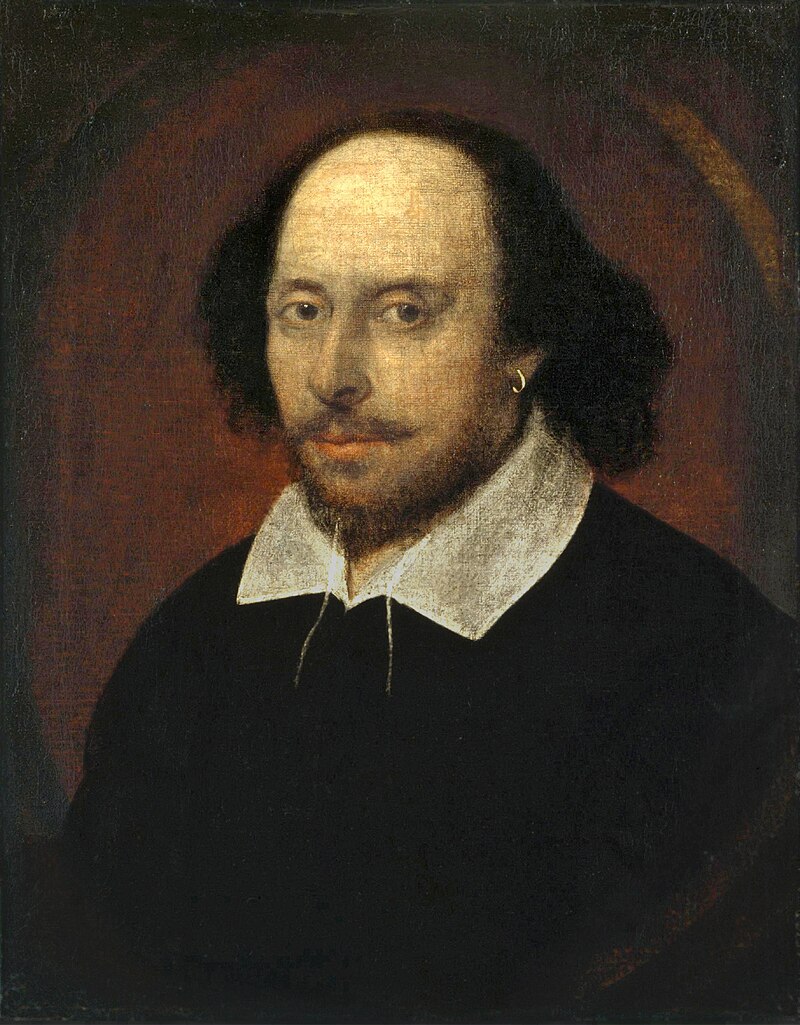
William Shakespeare (26 April 1564 (baptised) – 23 April 1616)was an English poet, playwright, and actor, widely regarded as the greatest writer in the English language and the world's pre-eminent dramatist.He is often called England's national poet, and the "Bard of Avon". His extant works, including collaborations, consist of approximately 38 plays,154 sonnets, two long narrative poems, and a few other verses, some of uncertain authorship. His plays have been translated into every major living language and are performed more often than those of any other playwright.
Shakespeare was born and brought up in Stratford-upon-Avon, Warwickshire. At the age of 18, he married Anne Hathaway, with whom he had three children: Susanna, and twins Hamnet and Judith. Sometime between 1585 and 1592, he began a successful career in London as an actor, writer, and part-owner of a playing company called the Lord Chamberlain's Men, later known as the King's Men. He appears to have retired to Stratford around 1613, at age 49, where he died three years later. Few records of Shakespeare's private life survive, which has stimulated considerable speculation about such matters as his physical appearance, sexuality, and religious beliefs, and whether the works attributed to him were written by others.

SUMMARY:


The complicated plot of Antony and Cleopatra has numerous twists and turns, and takes us across an ocean and back several times. We begin in Egypt with Mark Antony, one of the three leaders (or triumvirs) of the Roman Republic, reveling with his powerful lover Cleopatra, the Queen of Egypt. This drunken merry-making is getting in the way of his being an effective ruler in Rome, and the people at home are beginning to resent it. He gets news that his wife, Fulvia, alongside his brother, has been making war against the other triumvirs, and also that Sextus Pompeius, son of Pompey the Great (a former ruler of Rome), is threatening Rome as well. Also, there are pirates. Argh!
Antony finds out that his wife is dead, which solves the war problem—but he really does need to be getting back to Rome to address the Pompey situation. He leaves Egypt with Cleopatra’s half-hearted blessing and begins to fix stuff back home in Rome. He and Octavius Caesar (another triumvir) have a fight about the personal things between them, and decide to fix the situation by marrying off Caesar’s sister, Octavia, to Antony. Even though Antony hasn’t proven to be Mr. Marrying-Kind, the idea is that Octavia will form a bond between the two men—because she loves them both, they’ll love each other. It’s not two minutes before Antony meets with a soothsayer who tells him to get away from Caesar, because Caesar mutes his power. Antony agrees that he should head back to Egypt, where his pleasure lies. 
Then, the triumvirs meet with Pompey to see if they can negotiate instead of going to war. Pompey is fighting to avenge his father’s death, but he gives in to the others and makes a truce. They agree that he gets a little piece of southern Italy, as long as he gives wheat to the Romans. They all celebrate drunkenly onboard Pompey’s ship that night. One of Pompey’s servants, Menas, suggests that they kill the drunk triumvirs while they have them, but Pompey is too honest to do this (though he wouldn’t have minded if someone else had done it without involving him). Murder aside, they go back to drinking. So much partying goes down that Lepidus (the third triumvir) gets carted out of drunken scene.
Click To Buy
Later, the plan is for Antony is to head back to Athens with his new bride while Caesar stays in Rome. Caesar charges Antony to take good care of his sister, and Antony promises to do so. Also, Antony’s men have been fighting a war in Parthia (modern-day Iraq) with good success, even without his leadership. Back in Egypt, Cleopatra has found out about Antony’s marriage, whipped the messenger, threatened to stab him, and then sent him to see if Octavia’s assets rival her own. Cleopatra is pleased to find out that Octavia looks plain, since it means she has a good chance of winning Antony back. 
Back in Athens, Antony reports to Octavia that Caesar has already violated the pact with Pompey, is trash-talking Antony in public, and has dismissed Lepidus from office. Antony can’t abide by this and needs to fight for his honor. Octavia is torn between her brother and her husband, and asks to go back to Rome to see if she can make peace with her brother. Antony sends her off, and then promptly heads back to Egypt to begin preparing war for and also to hang out with his lover.
In Egypt, Cleopatra lends her ships to Antony while he gets ready to meet Caesar at sea. Although it’s not his arena of choice, Antony’s going for the sea showdown because Caesar has challenged him to a face-off on the ocean and he doesn’t want to be a chicken. Cleopatra stubbornly refuses to sit at home while all the action is outside, but once in the battle, even as things are looking up for Antony’s side, she runs away. Antony, essentially whipped, follows her and totally forfeits the battle. He admits she’s conquered his heart, and laments that he’s no longer a soldier. But then she gives him a kiss. He sends a schoolmaster, his children’s tutor, to give conditions of surrender to Caesar. He asks to either be left alone in Egypt, or to be allowed to be a private citizen in Athens. 
Caesar won’t grant any of Antony’s wishes, but says Cleopatra can have anything she wants if she’ll either exile Antony or have him murdered in Egypt. Hearing this, Antony is not a happy camper, and resolves to murder Caesar in hand-to-hand combat (no more of this sea business). While he goes off to write an "I’m going to murder you in hand-to-hand combat" letter, another messenger from Caesar (named Thidias) slips in. This guy is supposed to use his cunning linguistic skills to whet Cleopatra’s appetite for treachery against Antony. She’s just about to give her allegiance to Caesar when Antony walks in, has Thidias whipped, and gives Cleopatra a piece of his mind. She says she’s sorry, and he forgives her. Then they party hard, preparing for a new battle the next day. 
We learn that Enobarbus, Antony’s loyal friend, has defected to Caesar’s camp because he thinks even Cleopatra has abandoned Antony (seeing her flirt with Thidias). He thinks Antony has no chance of winning. Later that same night, soldiers on watch hear strange music playing, and they conclude that this is the sound of Hercules (an ancestor of Antony’s) abandoning Antony.
The next morning, everyone is in high spirits about battle. Antony hears that Enobarbus has fled and instead of being angry he feels sorry for the guy, sending treasure chests after him. He laments that his own bad fortune has driven Enobarbus to switch teams. In that day’s battle, Antony soundly trounces Caesar’s troops, and there’s much celebrating. Antony is all courage again, and they have a big march in Alexandria, which they’ve won back. Meanwhile, Enobarbus stands under the moon and laments his broken heart. He regrets that he’s betrayed Antony, and wishes the world to remember him as the worst traitor ever. Some soldiers are watching him, unnoticed, and see him die of a broken heart. 
It’s morning again, and perhaps with renewed courage from yesterday’s victory, Antony meets Caesar at sea. This time, he watches his fleet greet Caesar’s men as friends. Oops. The battle is lost and he’s furious. He blames Cleopatra, not the men, because he’s convinced that her treachery is at the root of his loss—she must have betrayed him to Caesar. He goes to the palace in a rage, resolving to kill her. 
Seeing her lover’s rage, Cleopatra flees to her monument and locks herself up. She has her servant send word to Antony that she’s killed herself, to see how he’ll respond. He responds by deciding to kill himself too—thinking it was noble of Cleopatra to be the one who decided when her life was over. He’d like to be his own conqueror. He asks his friend Eros to kill him, and Eros chooses to kill himself instead rather than go through with it. Antony then takes it upon himself to fall on his sword, and he’s done a bad job of it apparently, so he doesn’t die immediately. Just then Diomedes enters, bringing the news that Cleopatra isn’t really dead. Antony, hearing this, asks to be taken to her, so he can die near her. He’s not even that mad.
Antony, bleeding all over the place, tells Cleopatra she should yield herself to Caesar for her safety and honor. He says she can’t trust anyone around Caesar except this one guy, Proculeius. Cleopatra says she won’t trust anyone but her own resolution and her own hand, which seems to mean she’s going to kill herself. As Antony’s dying, he asks to be remembered as a noble Roman who was conquered by himself and no other, especially not Caesar. He dies, and Cleopatra beings the preparations to kill herself, too.
Just then, Caesar’s guy Proculeius comes into the monument to negotiate with Cleopatra and give her basically whatever she wants. She asks for her kingdom, Egypt, to be given to her son. As Proculeius leaves, Cleopatra is overtaken by some of Caesar’s guards. She tries to kill herself, but they’re fast and stop her. Dolabella, one of Caesar’s more kindhearted guys, takes over, pitying Cleopatra as she tells him of Antony’s greatness. Dolabella confirms her fear that Caesar means to make her a central attraction in his victory parade. Caesar shows up, and there’s an episode where Cleopatra claims to have given him all her treasure. Unfortunately, her treasurer says she lied, so fighting follows. Anyway, Caesar says she can keep her stuff, and she shouldn’t worry, as she will direct how the Romans will treat her. 
Once Caesar leaves, Dolabella tells Cleopatra that Caesar will send for her and her children in three days to be put in the victory march. Cleopatra wails that she doesn’t want to be breathed on and scowled at by filthy Romans. So, instead, she has a plan. She has her women dress her in her finest robes and then receives a rather harmless looking visitor. It turns out this harmless visitor brought her some figs in which he’s hidden some poisonous snakes (asp) at her request. Cleopatra, all dolled up, says she’s going to meet her husband (that would be Antony). She kisses Iras, her servant, who dies immediately. Then, she puts an asp to her breast, and says some insulting things about Caesar. As Charmian cries out that there is a snake on her breast, Cleopatra applies another asp to her arm and dies. Charmian is very sad about this, so naturally she fixes her lady’s crown. Just then, Caesar’s guard enters, so Charmian applies an asp to herself. She says Cleopatra’s work was befitting for a royal princess descended of many kings, and then she dies. 
Dolabella and then Caesar march in to find all the dead women, and wonder how they died. Dolabella discovers the wounds on Cleopatra’s chest and arms, and another guard finds the slimy trail of the poisonous snake in the figs. Caesar admits it was in Cleopatra’s royal nature to do what she pleased, and decrees that she’ll be buried next to Antony. The funeral will be attended by the solemn Romans, and then they’ll go back home to the former Roman Republic, which is now the new Roman Empire.


Continue reading

ABOUT THE AUTHOR:


Geoffrey Chaucer ( 1343 – 25 October 1400), known as the Father of English literature, is widely considered the greatest English poet of the Middle Ages and was the first poet to be buried in Poets' Corner of Westminster Abbey.
While he achieved fame during his lifetime as an author, philosopher, and astronomer, composing a scientific treatise on the astrolabe for his ten-year-old son Lewis, Chaucer also maintained an active career in the civil service as a bureaucrat, courtier and diplomat. Among his many works, which include The Book of the Duchess, the House of Fame, the Legend of Good Women and Troilus and Criseyde. He is best known today for The Canterbury Tales.
Chaucer was a crucial figure in developing the legitimacy of the vernacular, Middle English, at a time when the dominant literary languages in England were French and Latin.
Geoffrey Chaucer was born in London sometime around 1343, though the precise date and location of his birth remain unknown. His father and grandfather were both London vintners; several previous generations had been merchants in Ipswich.

SUMMARY:


Click To Buy
The Wife of Bath begins the Prologue to her tale by establishing herself as an authority on marriage, due to her extensive personal experience with the institution. Since her first marriage at the tender age of twelve, she has had five husbands. She says that many people have criticized her for her numerous marriages, most of them on the basis that Christ went only once to a wedding, at Cana in Galilee. The Wife of Bath has her own views of Scripture and God’s plan. She says that men can only guess and interpret what Jesus meant when he told a Samaritan woman that her fifth husband was not her husband. With or without this bit of Scripture, no man has ever been able to give her an exact reply when she asks to know how many husbands a woman may have in her lifetime. God bade us to wax fruitful and multiply, she says, and that is the text that she wholeheartedly endorses. After all, great Old Testament figures, like Abraham, Jacob, and Solomon, enjoyed multiple wives at once. She admits that many great Fathers of the Church have proclaimed the importance of virginity, such as the Apostle Paul. But, she reasons, even if virginity is important, someone must be procreating so that virgins can be created. Leave virginity to the perfect, she says, and let the rest of us use our gifts as best we may—and her gift, doubtless, is her sexual power. She uses this power as an “instrument” to control her husbands.
At this point, the Pardoner interrupts. He is planning to marry soon and worries that his wife will control his body, as the Wife of Bath describes. The Wife of Bath tells him to have patience and to listen to the whole tale to see if it reveals the truth about marriage. Of her five husbands, three have been “good” and two have been “bad.” The first three were good, she admits, mostly because they were rich, old, and submissive. She laughs to recall the torments that she put these men through and recounts a typical conversation that she had with her older husbands. She would accuse her -husband of having an affair, launching into a tirade in which she would charge him with a bewildering array of accusations. If one of her husbands got drunk, she would claim he said that every wife is out to destroy her husband. He would then feel guilty and give her what she wanted. All of this, the Wife of Bath tells the rest of the pilgrims, was a pack of lies—her husbands never held these opinions, but she made these claims to give them grief. Worse, she would tease her husbands in bed, refusing to give them full satisfaction until they promised her money. She admits proudly to using her verbal and sexual power to bring her husbands to total submission.


Continue reading